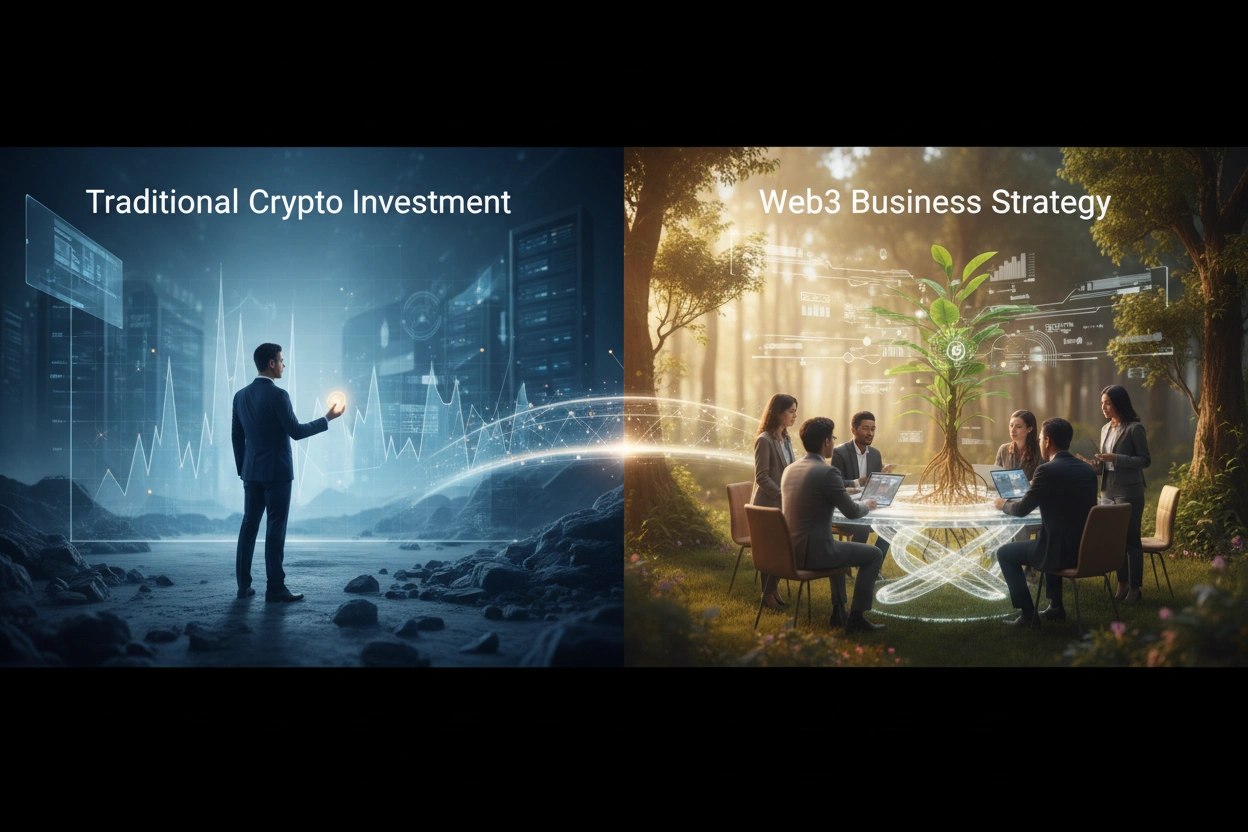
The evolution of digital finance has been nothing short of revolutionary, with the emergence of Web3 business strategy reshaping how businesses operate and investors engage with cryptocurrencies. In 2026, the distinction between traditional crypto investment strategies and innovative Web3 business strategies has become increasingly pronounced. Understanding these differences is crucial for entrepreneurs and investors aiming to navigate this dynamic landscape effectively.
This article will delve into the nuances of Web3 business strategy, exploring how it contrasts with conventional crypto investment. Additionally, we will discuss the top NFT business models that are shaping this new frontier, providing actionable insights and practical information for those looking to leverage these opportunities.

Web3 represents a paradigm shift in the digital economy, characterized by decentralized platforms, enhanced user privacy, and a strong emphasis on community governance. Unlike traditional investment strategies that focus primarily on financial returns, a Web3 business strategy is more holistic, incorporating elements such as user engagement, governance participation, and community involvement.
A cornerstone of Web3 business strategy is decentralization. This means that control is distributed across a network rather than being concentrated in a single entity. Businesses operating under this model often utilize decentralized autonomous organizations (DAOs) to make collective decisions.
In contrast to traditional crypto investments, which often prioritize profit maximization, Web3 business strategies emphasize community involvement. Building a strong community can lead to sustainable growth and innovation.

Traditional crypto investment strategies typically revolve around buying and holding assets, trading on exchanges, or investing in ICOs (Initial Coin Offerings). These strategies are often characterized by a focus on price speculation and market timing.
A prevalent misconception in traditional crypto investment is that it solely revolves around short-term gains. While day trading and speculation can yield profits, a more balanced approach that includes long-term holding can also be effective. Investors must recognize that the crypto market's volatility can present both risks and opportunities.

As the Web3 landscape continues to evolve, NFTs (non-fungible tokens) have emerged as a significant component of digital ownership and business strategy. Understanding various NFT business models can provide insights into how companies are leveraging this technology.
One of the most well-known NFT business models is the sale of digital art. Artists can mint their creations as NFTs and sell them directly to consumers.
The gaming industry has rapidly adopted NFTs, allowing players to buy, sell, and trade in-game assets.
NFTs can also serve as collectibles or membership tokens, granting holders exclusive access to events or communities.
The concept of virtual real estate is gaining traction, with platforms allowing users to buy and sell virtual land as NFTs.
Musicians and entertainers are utilizing NFTs to sell music, concert tickets, and exclusive content directly to fans.
While Web3 business strategies offer numerous opportunities, there are common pitfalls that entrepreneurs should avoid.
Failing to prioritize community can lead to disengagement and ultimately impact the success of the business. Building and nurturing a community requires ongoing effort and communication.
As regulations around cryptocurrencies and NFTs evolve, businesses must remain compliant to avoid legal issues. Understanding the regulatory landscape is essential for sustainable operations.
While technology is crucial, businesses must not lose sight of user experience and value proposition. A technology-first approach can alienate users who prioritize usability and engagement.
As we move further into 2026, the potential for Web3 business strategies continues to expand. Innovations in blockchain technology, coupled with a growing emphasis on user-centric models, are likely to reshape industries beyond finance and art.
Understanding the differences between Web3 business strategies and traditional crypto investment approaches is vital for anyone looking to navigate the evolving digital landscape. While traditional strategies often emphasize speculative gains, Web3 business strategies focus on community engagement, decentralization, and innovative business models like NFTs. As we have explored, the latter offers numerous opportunities for sustainable growth and user empowerment.
The insights provided throughout this article can help you make informed decisions about engaging with Web3 technologies and understanding the NFT business models that are shaping this space. Edge Of is committed to guiding you through these complexities, ensuring you leverage the full potential of the Web3 revolution.
To learn more about how Web3 business strategies can transform your approach to digital finance and investments, visit Edge Of. Our resources are designed to empower you with the knowledge and tools needed to succeed in this rapidly evolving landscape. Contact Edge Of to start your journey today.
Get exclusive insights into the ever-evolving worlds of Web3, along with exciting previews of upcoming projects and giveaways. Engage with the future today.
Subscribe Now


.svg)